Slots and Casino Games: What to Play First
9 min
Three doors, three completely different games
Open any casino lobby and you are really being offered three distinct experiences wearing the same branding. Slots ask nothing of you but a button press. Table games ask for decisions and, in some cases, reward them. Instant games compress the whole arc of a bet into a few seconds and one choice. Choosing between them has less to do with odds than with what you actually want from the next hour of your life.
The mistake most people make is picking a door by accident — clicking the biggest banner and assuming it represents the whole building. Free play makes that mistake cost nothing to correct, and half an hour spent deliberately trying all three will tell you more about your own taste than a year of drifting.
There is also a fourth door that nobody talks about, which is the door marked out. Choosing not to play a category — deciding that instant games make you feel awful, or that table games demand more concentration than you want to give tonight — is a legitimate outcome of exploration, and arguably the most valuable one. A lobby is not a checklist. You do not owe any of it your time.
What slots are for
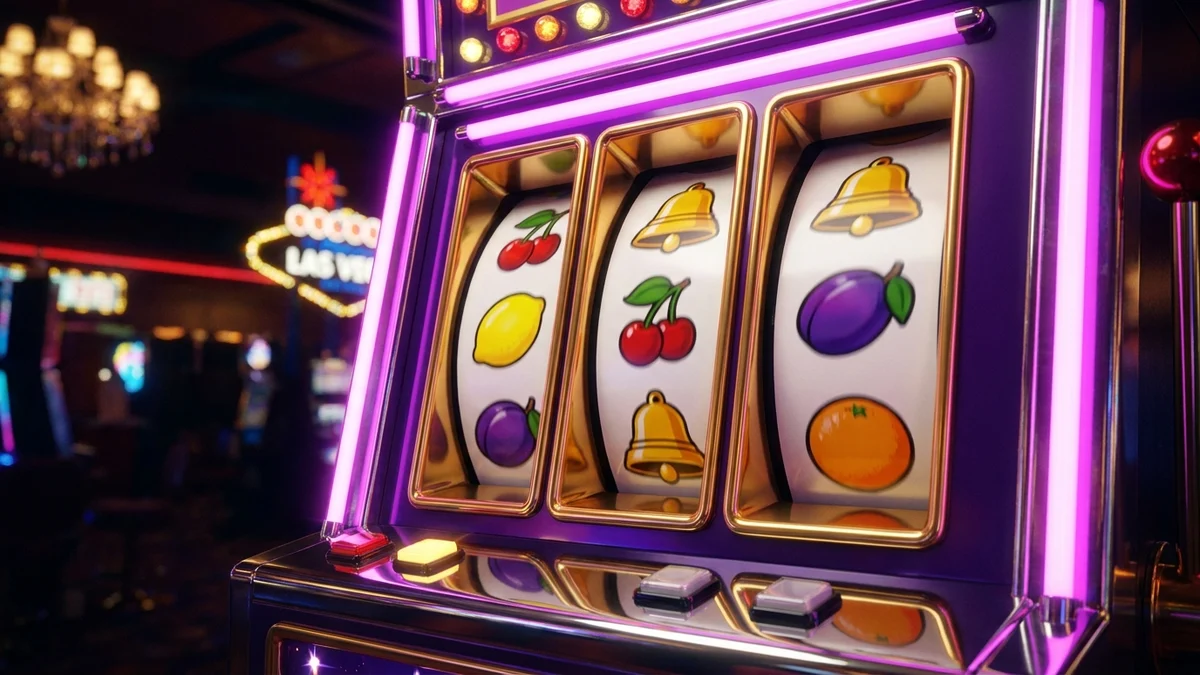
Slots are for when you want the machine to carry the session. There is nothing to decide, nothing to get wrong, and no cognitive load beyond choosing a stake. That is a genuine feature: after a long day, a game that asks for zero decisions and delivers a steady drip of sensory feedback is doing exactly what it was built to do.
The trade is that you have no influence at all. Whatever happens, happens, and the only meaningful choices you make were made before you started — which machine, which stake, how long. If that lack of agency bothers you, no amount of slot content will fix it, and you should probably be standing at a different door.
That absence of agency has a strange side effect: slots are unusually easy to play badly without noticing. Because no decision ever feels wrong, nothing interrupts you, and a session can run far longer than intended purely because there was never a natural moment to stop. Table games have hands. Instant games have rounds. Slots have an infinite corridor, and the only person who can put a door in it is you.
What table games are for
Table games are for people who want to be involved. Blackjack has genuine strategy: the decisions you make measurably change the outcome, and playing well is a real, learnable skill even though it never turns the game in your favour. Roulette is about understanding what each bet actually buys you, and the transparency of it — you can see every number, every pocket, every payout — has an appeal that no reel set can match.
The catch is that decisions bring pressure. Slots forgive everything. A table game will let you make a bad choice and then show it to you, repeatedly. That is uncomfortable for some players and exactly the point for others, which is why it is worth finding out which sort you are with nothing on the line.
Blackjack in particular is worth an hour of anyone’s free-play time even if they never intend to play it for money, because it is the clearest demonstration available that decisions can have measurable value. Making the mathematically correct move again and again, and watching it still lose, is a superb education in the difference between a good decision and a good outcome — a distinction most people never really internalise.
What instant games are for
Crash, Mines, Plinko, Limbo and their relatives strip a bet down to its skeleton. There is usually one decision — when to stop, where to click, how far to push — and then an immediate, unambiguous result. No reels, no dealer, no narrative. Just tension and resolution, over and over, at whatever pace you want to set.
They are the purest test of nerve on the lobby, and because the loop is so short they magnify whatever tendencies you already have. Someone who chases losses will chase them faster here than anywhere else. Free play makes that a fascinating self-experiment rather than an expensive one.
Decision density, and why it matters more than odds
A more useful way to compare these three than talking about house edge is to ask how many decisions per minute a game demands. Slots: essentially zero. Table games: a handful, each with real weight. Instant games: one, but it arrives every fifteen seconds and it never stops arriving. That number, more than any percentage, determines whether a game feels relaxing or exhausting.
Match it to your state of mind. Tired and wanting spectacle? Slots. Sharp and wanting to think? Blackjack. Restless and wanting something to push against? An instant game. Playing the wrong category for your mood is the most common reason a session feels hollow, and it has nothing to do with whether you won.
There is a related question worth asking: how much does the game want from your eyes? Slots will happily run in the background of a podcast. A table game will punish inattention. An instant game demands you be present at a precise moment or the round is decided without you. Knowing how much attention you actually want to spend is a better filter than any list of house edges.
The edge exists everywhere, and it does not sleep
Every game in every category carries a built-in advantage for the operator. It varies in size, and skill can shrink it in a couple of games, but it never disappears and it never turns negative. Anyone who tells you they have found a game where the maths works in the player’s favour over time is either mistaken or lying, and usually the latter.
This is not an argument against playing. It is an argument for knowing what you are buying. You are buying entertainment, priced in expected loss, and once you accept that pricing the whole activity becomes far easier to keep in proportion. What you must never do is confuse the purchase with an investment.
A sensible route through the lobby
Start with slots, because they teach you the vocabulary without demanding anything. Play two or three, understand what a scatter does and how a feature triggers, and let the format become familiar. Then move to a table game and feel what it is like to have your choices matter. Then try one instant original and notice how much faster your pulse moves when the decision is yours and the clock is running.
By the end of that circuit you will have a clear preference, and it will very likely surprise you. Plenty of people who assume they are slots players discover they actually want blackjack. Plenty of confident table players find they relax into the reels. The only way to find out is to try all three, and free play is what makes trying all three trivial.
Do the circuit in one sitting if you can, because comparison is far sharper when it is immediate. Twenty minutes on each, same evening, same mood, no interruptions. Memory is an unreliable narrator when it comes to gambling — it exaggerates wins, compresses dead time and forgets boredom entirely — so judging three categories from three different weeks will tell you far less than judging them from one hour.
Building a session that does not sprawl
Whatever door you pick, decide the shape of the session before you begin: how long, and what would make you stop. In free play the honest limit is time, since there is no money to run out, and a game with no natural ending will happily take three hours from you if you let it. Setting a stopping point is not a killjoy rule, it is what keeps the activity a choice.
It is also excellent rehearsal. The habits that keep a free session in proportion — a fixed limit, a decision made in advance, a willingness to walk away while things are going well — are precisely the habits that matter if you ever play for money. Practising them when nothing is at stake is the cheapest training available.
What to play first, honestly
If you genuinely have no idea, play a slot with a friendly, readable base game, at a small stake, for a hundred spins. It costs nothing, it teaches you the language everyone else in the lobby is speaking, and it gives you a baseline to compare everything else against. Almost every experienced player started at a reel set, and there is no shame in the well-worn path.
Then go looking for something that irritates you about it — the lack of control, the pace, the noise — and find the category that fixes that irritation. Preference is usually discovered by elimination, and having a whole lobby available for free is the ideal way to run that elimination quickly.
And if the honest answer, after all that, is that none of it holds you, that is a perfectly good result too. The lobby is not a rite of passage. It is a shelf of games, most of which will not suit you, and being able to close the tab without a backward glance is the single healthiest relationship anybody can have with the whole business.
The rules that apply everywhere
Nothing on this site involves real money. There is no deposit, no withdrawal, no prize and no account, and every game runs on virtual credits that reset whenever you want them to. Play the whole lobby, form your opinions, and take nothing away but the knowledge.
If you carry any of this to a real-money environment, carry the discipline rather than the confidence. Decide a limit, stick to it, and never treat a good run in demo as evidence about anything. These pages are intended solely for adults aged 18 or over.
How the categories fail you differently
Each door has its own characteristic failure mode, and knowing them in advance is worth more than any tip. Slots fail you through duration: nothing stops, so nothing tells you to leave. Table games fail you through the illusion of control, because skill exists in them and it is very easy to slide from playing well to believing you can win. Instant games fail you through speed, delivering more decisions per minute than judgement can keep up with.
Free play lets you meet each of those failure modes with nothing at stake, which is the only sane place to meet them. If you can sit through an hour of demo slots and close the tab without reluctance, that is a real result. If you cannot, that is a more important result still — and it cost you precisely nothing to find out.
Frequently asked questions
Should I start with slots or table games?
Slots are easiest for beginners; table games reward a little strategy. Free play lets you try both at no cost.
Are all casino games free at MySlots?
Yes. Slots, table games and instant originals are all playable free in demo mode with virtual coins.
Do casino games need a download?
No. Every slot and casino game at MySlots runs in your browser, with no app or installation.
Which category is the most relaxing?
Slots, by a wide margin, because they demand no decisions. Table games ask you to think and instant games ask you to hold your nerve, which is stimulating rather than restful.
Can skill beat the house in any of them?
Skill can shrink the edge in games like blackjack, but it never removes it. No category on any lobby has a long-run advantage for the player, and anyone claiming otherwise is selling something.
How do I stop a free session running away with me?
Set a time limit rather than a money limit, since there is no balance to run out. Decide the length before you start and notice any resistance you feel when it is time to stop.
Read next
Demo only - all games use virtual currency. No real money, no withdrawals, no prizes. Gambling with real money can be addictive; if you need support visit ncpgambling.org or call 1-800-GAMBLER. 18+ only.