Online Slots: How Slot Machines Really Work
10 min
The number is picked before the reels move
The animation you watch is theatre. By the time the first reel starts spinning, the outcome already exists: the game asked its random number generator for a value the instant you pressed the button, mapped that value onto a stop position for every reel, and then played you a few seconds of spinning to make the reveal feel earned. Slam-stopping the reels does not change the result, it just skips the show.
This is worth internalising because it dissolves an entire family of superstitions. You cannot influence a spin with timing, rhythm, bet size or force of will, because there is nothing left to influence. The moment of chance has already passed. What remains is presentation, and modern slots are extremely good at presentation.
It also explains one of the most common complaints you will read online: that a game changed after a player switched from demo to real money, or that it went cold the moment they raised their bet. The machine has no idea what you bet, no idea which mode you are in, and no mechanism for reacting to either. What actually changed is the observer — a player who is now paying for each spin notices every dry stretch with painful clarity.
What an RNG really is
A random number generator in a certified slot is a piece of software that produces a stream of numbers with no discoverable pattern and no dependence on what came before. It runs continuously, whether you are playing or not, and your press of the spin button simply takes whatever it is holding at that microsecond. Two players hitting spin a thousandth of a second apart get different numbers, and neither of them can aim.
Independence is the key property. The generator has no memory, which means the game has no memory. A slot that has paid nothing for four hundred spins is exactly as likely to pay on the next one as a slot that just handed out its top feature. Humans find this genuinely difficult to accept, which is why the gambler’s fallacy has outlived every attempt to kill it.
Reels, weights and why symbols are not equal
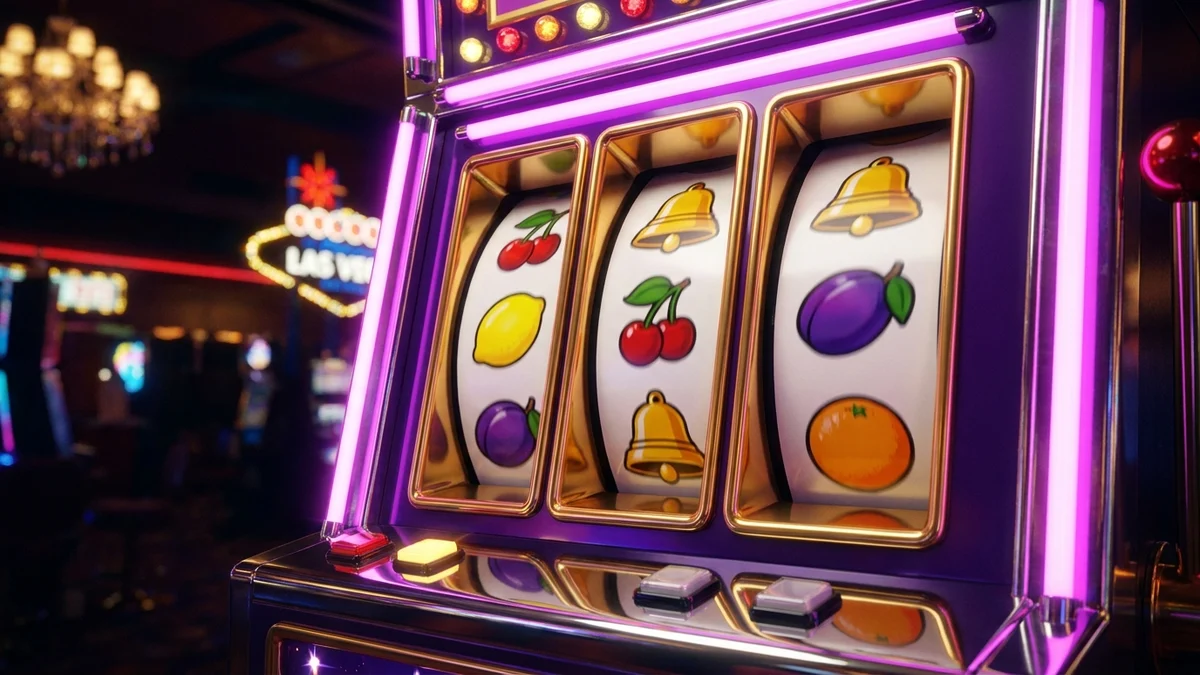
A reel strip is a list, and the symbols on it are not evenly distributed. Low-value symbols — the card ranks, the fruit, the filler — appear many times. The premium symbol that actually pays appears rarely, and the scatter that triggers the bonus appears rarer still. The visible reel you see through the window is a small slice of a much longer strip, which is why a game can look like it is constantly one symbol away from something.
Different reels often carry different strips, too. It is common for the scatter to be weighted more heavily on some reels than others, which is exactly why two scatters land so much more often than three. The near-miss is not an accident of chance. It is a structural consequence of how the strips are built, and it is doing precisely what it was designed to do to your pulse.
Once you understand strips and weighting, the concept of a slot being tight or loose collapses into something much more concrete. Nothing is being loosened or tightened during play. The distribution was fixed when the game was certified, and it is exactly the same on your four-hundredth spin as it was on your first. What varies is not the machine but the sample you happen to be standing in.
Paylines, ways, clusters and scatter pays
The oldest system is the payline: a fixed path across the reels, and matching symbols on that path from the leftmost reel pay out. Twenty lines, twenty-five, forty — the number tells you how many patterns are being checked, not how generous the game is. Ways-to-win games drop the fixed paths and pay any matching symbols on adjacent reels, which is how a game advertises hundreds or thousands of ways.
Then there is the modern school. Cluster pays reward touching groups of symbols anywhere on a grid. Scatter pays — the engine behind Sweet Bonanza and Gates of Olympus — ignore position entirely and pay whenever enough matching symbols appear anywhere on screen. It sounds looser and more generous. It is not. The paytable simply compensates by demanding eight or more of a symbol for a payout that a line game would have given you for three.
RTP, honestly explained
Return to player is the share of everything wagered that the game returns across an astronomical number of spins. It is calculated by the studio, verified by a testing laboratory, and it describes the long run — a run so long that no human session comes close to touching it. Over your evening, the number is essentially irrelevant. Over the game’s lifetime across millions of players, it is exact.
The house edge is simply the remainder. A game returning ninety-six percent keeps four, and it keeps it relentlessly, spin after spin, regardless of whether you are up or down. This is why the phrase due for a payout is nonsense: the edge is not a debt the machine settles, it is a tax it collects continuously.
And here is the detail almost nobody mentions. Many studios ship the same title in several RTP configurations, and it is the operator who chooses which build to deploy. A game you know from one site may be running a materially lower return on another, with identical art, identical sound and identical animations. If you ever play for real, check the RTP inside the game’s own info screen on that specific site — it is the only figure that applies to you.
It is worth being precise about what the number describes. Return to player is not the proportion of players who profit, nor the share of sessions that end in the black — it is the proportion of total wagered money returned across the whole population of spins, most of it delivered to a small number of players through rare, large events. The typical outcome sits well below the average, and the average is dragged upward by results almost nobody experiences.
Hit frequency versus volatility
Hit frequency is how often a spin returns anything at all. Volatility is how wildly those returns are spread. They sound like the same idea and they are not: a game can pay on a third of its spins and still be brutally volatile if most of those payouts are worth less than the bet that bought them. Plenty of modern slots do exactly that, and the resulting drip of tiny wins is one of the most effective retention mechanics ever designed.
Low-volatility games hand out modest wins regularly and rarely surprise you. High-volatility games go quiet for long, uncomfortable stretches and then pay everything at once, almost always through the bonus round. The average return can be identical. The experience of getting there is not remotely comparable, and choosing between them is the single most consequential decision you make when picking a machine.
There is one more wrinkle. Volatility is not printed on a standardised scale, and studios describe it loosely — low, medium, high, or a row of little bars. The description tells you something, but you learn far more in fifty spins than in any label. If the game pays constantly in small change, you are on a gentle machine. If it stares back at you in silence, you are on a violent one, whatever the info screen claims.
Where the money actually lives
In most modern slots, a large slice of the total return is locked inside the feature. The base game is, mathematically speaking, a waiting room — it is there to keep you present, to pay just enough to feel alive, and to occasionally deliver the scatters that let you into the room where the maths gets interesting. Strip out the bonus and the base game on its own would feel merciless.
That is why volatility and feature design are inseparable. A game whose free spins carry escalating multipliers is front-loading its entire personality into a rare event. When people say a slot is dead, what they usually mean is that they have not triggered the feature in a long time — which is not a statement about the machine, only about their sample.
This is also why comparing games by their maximum win is such a poor way to choose. A staggering top multiplier is not a promise, it is a tail event so distant that most players will never observe it in a lifetime of spinning, and its main function is to appear on marketing material. The number that shapes your evening is not the ceiling — it is how often anything at all happens on the way to it.
Megaways and shifting reels
Megaways games change how many symbols each reel shows on every spin, so the number of winning combinations expands and collapses spin to spin. It is an elegant trick: the same reel set can feel cramped and hopeless one moment and enormous the next, and the arithmetic of the win count does the emotional work for free. The Dog House Megaways is the version of this most people meet first.
The important thing to understand is that a huge combination count is not the same as a huge chance of winning. More ways means more paths, but each path is worth less, and the game’s maths is balanced accordingly. A screen showing over a hundred thousand ways is impressive and mostly cosmetic — the return has already been fixed, and the shifting numbers are how the game distributes it.
The features you will meet again and again
Wilds substitute for paying symbols, sometimes carrying multipliers, sometimes expanding to fill a whole reel. Scatters ignore lines and exist mainly to open the feature. Tumbles remove winning symbols and drop new ones in, letting a single spin cascade into a chain. Multipliers stack, sometimes additively, sometimes multiplicatively — and the difference between those two words is the difference between a decent win and a screenshot.
Bonus buys let you pay a large multiple of your bet to skip straight into the feature. They are widely misunderstood as a shortcut to profit. They are not: the price is set so that buying the feature returns roughly what grinding for it would, and often slightly less. What they really do is compress a long, patient session into a few violent minutes, which raises volatility enormously. In demo mode that is a fascinating experiment. With real money it is a fast way to find your limit.
What you actually control
Two things: how much you bet, and how long you play. That is the complete list. Everything marketed as slot strategy — bet ladders, stop-loss systems, switching machines after a win, spinning at particular times — is an attempt to impose structure on a process that is structurally indifferent. None of it moves the edge, because the edge is baked into the reel strips, not into your behaviour.
What understanding the machinery does buy you is calibration. You stop expecting the bonus to be owed to you, you stop reading meaning into a cold streak, and you start choosing games because their rhythm suits you rather than because a stranger called them lucky. Spin the demos here to test all of it at zero cost, and if you ever play for real money elsewhere, do it with a fixed budget and clear eyes. Adults only, 18 and over.
The final thing worth understanding is that none of this is a criticism of slots. A game does not have to be beatable to be worth playing, any more than a film has to be profitable to watch. The problem is never the machine — the problem is the story people tell themselves about the machine. Learn how it works, enjoy it for what it is, and let the maths be exactly as boring as it actually is.
Frequently asked questions
Can you predict a slot’s next spin?
No. Each spin is generated independently by an RNG, so results are random and cannot be predicted or influenced.
What is a good slot RTP?
RTP around 96% or higher is considered solid. It is a long-run average, so short sessions can vary widely.
Does volatility change how much I win?
Volatility changes how wins arrive — small and frequent, or rare and large — not the long-run return, which is set by RTP.
Does stopping the reels early change the outcome?
No. The result is determined the moment you press spin. Tapping to stop the animation only shortens the reveal — the symbols were already decided.
Can the same slot have different RTP on different sites?
Yes. Studios often ship several RTP builds of one title and the operator picks which to run. Always check the RTP shown inside the game’s own info panel on the site you are playing.
Do more paylines mean better odds?
No. More lines means more patterns checked per spin, but each costs more to cover and pays proportionally less. The overall return is set by the maths model, not the line count.
Read next
Demo only - all games use virtual currency. No real money, no withdrawals, no prizes. Gambling with real money can be addictive; if you need support visit ncpgambling.org or call 1-800-GAMBLER. 18+ only.